
Rather than a traditional runway photo essay or garment showcase, this feature focuses on the strategic conversations, brand ethos, and systemic ideas shaping Southern Africa’s design landscape. To view full runway collections, exhibitor lookbooks, and high-resolution event photography from the showcase, visit the official All Fashion Sourcing 2026 Gallery.
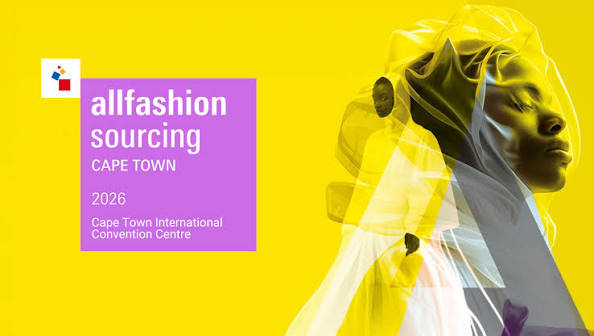
We often talk about culture as if it is something that happens to us—an inherited relic passed down through generation, static and set in stone. But walking the floor at the All Fashion Sourcing Exhibition at the CTICC, observing the interplay of textiles, heritage, and regional trade across Southern Africa, a different narrative emerges: culture is an intentional act. Cultures are by design.
Entering the space, my intention was simple: to uncover grassroots stories that define the contemporary South African experience. What I walked away with was a far broader, more urgent imperative—the critical need for true regional integration across the Southern African Development Community (SADC) fashion, textile, and leather ecosystems.
To unpack how local design houses are navigating interculturalism, heritage storytelling, and the eternal question of whether fashion qualifies as wearable art, I sat down with seven pioneering voices shaping our regional aesthetic landscape.
1. Qhawekazi Styles: Circular Aesthetics & Wearable Art
For Samukelisiwe Khanyile, founder of Qhawekazi Styles, fashion is unequivocal: “Art is bringing something to life—turning a thought into reality.” Our conversation settled on a shared philosophy that modern African fashion is fundamentally wearable art.
Her design ethos merges vibrant African aesthetics, incorporating Nguni-inspired patterns and geometric sensibilities, with strict environmental responsibility. As part of her sustainability journey (including her involvement in green enterprise development initiatives like those supported by Nedbank), Qhawekazi operates on a near-zero-waste principle.
Every single offcut is accounted for: if a piece of fabric cannot be seamlessly integrated into a garment, it is repurposed into statement purses, earrings, or fabric-swatch hats. Whatever remains beyond her studio’s capacity is donated to local SMMEs and community NGOs, creating a circular model where waste becomes opportunity.

2. Hlompho (H.Mor): Resilience, Symbols, and the Intercultural Barrier
For Hlompho Morojele, the mind behind H.Mor, fashion is an everyday living canvas—a space where designers bring their lineage to life like a painting on a gallery wall.
H.Mor’s signature textile prints draw deep inspiration from the Kharetsa (the spiral aloe), a resilient plant endemic to the high-altitude landscapes of Lesotho and parts of the Free State and Eastern Cape. For Hlompho, the aloe’s ability to thrive in harsh climates mirrors the structural resilience of her brand.
While she intentionally weaves traditional Nguni patterns and modern iterations of Shweshwe into her silhouettes, Hlompho offered a candid critique of our regional industry. Despite the fact that cultural identities constantly cross paths in daily life, she highlighted a persistent aversion within the formal Clothing, Textile, Footwear, and Leather (CTFL) sector toward genuine interculturalism.
Editor’s Note: H.Mor is set to showcase her collection at London Fashion Week during the week of 20 July 2026, taking Southern African symbolism onto the global stage.

3. Kokopelli: Natural Textiles, Heritage, and Rooted Employment
Meeting the effervescent Lache Davids, founder of Kokopelli, is an exercise in high-energy storytelling. The brand’s philosophy traces back to the ancient spirit of Kokopelli—a symbol Lache further connected with during a life-changing trip to Knysna—anchored by three foundational pillars: agriculture, festivity/music, and fertility.
A passionate traveler who sustained her early journey by teaching English online, Lache brings a global worldview back to local soil. While hemp serves as the brand’s cornerstone hero fiber, Kokopelli’s collections utilize a versatile range of natural, eco-conscious textiles designed for conscious living.
Rooted in memories of her grandmother curing ailments with natural indigenous herbs, Lache views Kokopelli as a vehicle for holistic community health. More than just a label, she takes immense pride in generating fair-wage employment for women in under-resourced Cape Town townships like Khayelitsha, proving that sustainable fashion must be economically restorative to be truly ethical.

4. Shweshwekini: Lighthearted Afro-Centricity
When Mapitso Thaisi couldn’t find afro-centric, culturally resonant swimwear that suited her aesthetic, she built her own solution. Shweshwekini was born out of a desire to address the systemic under-representation of traditional African prints in resort and activewear.
The brand’s clever moniker draws direct inspiration from the cultural crossover of Kente cloth swimwear (often dubbed “Kentekinis”) and the iconic Shweshwe fabric of Southern Africa.
What makes Mapitso’s work striking is her ability to infuse a sense of effortless lightheartedness into Afro-centric design—a space that can sometimes feel heavy under the weight of political statement. As an advocate for cultural empowerment, Mapitso spoke openly about the historical limitations placed on African trade integration, championing a future where Africa’s interconnected history of oneness is celebrated rather than siloed.

5. Olive Bean Leather Co.: Functional Perfectionism
Meeting Frederick Zeelie of Olive Bean Leather Co. offers an intriguing contrast: a former commercial diver whose quiet, reserved nature gives way to meticulous, uncompromising craftsmanship.
Frederick’s entry into fashion was born out of a fundamental desire for self-sufficiency and personal agency. Growing up in a restrictive, deeply conservative environment outside Cape Town, he began hand-crafting durable leather goods purely for himself. When onlookers repeatedly offered to purchase the pieces off his back, a brand was born.
Olive Bean is defined by an obsession with detail, structural integrity, and functional perfectionism. Currently expanding from premium leather accessories into apparel, with the ultimate goal of launching a fully local footwear line, Frederick represents the quiet power of self-taught, functional mastery.

6. Tribal Trend & Bold Couture: SADC Integration & The Royal Roots of Shweshwe
At the Lesotho Pavilion, Karabelo Sebokoana (Tribal Trend) and the creative force behind Bold Couture (Tebello) delivered a tag-team masterclass on regional trade and heritage preservation.
Their interactive session yielded a fascinating piece of fashion history: the origin of Shweshwe itself. The printed indigo cotton fabric—originally brought to Southern Africa by European traders and French missionaries in the 1830s—was gifted to King Moshoeshoe I of Lesotho. The Basotho people dubbed the fabric ‘se-Moshoeshoe’, which eventually morphed phonetically into Shweshwe, forever intertwining a global import with Basotho royal identity.
Both designers expressed immense pride in representing Lesotho’s burgeoning design ecosystem, while speaking openly about the practical hurdles they face. They contrasted the nostalgic stories of their parents—who could freely pack suitcases of handcrafted garments to sell across borders—with today’s rigid, bureaucratic customs declarations and trade barriers between Lesotho and South Africa.
Their call to action was clear: SADC brand houses and independent designers must establish collective regional bodies to tackle CTFL trade barriers, supply chain bottlenecks, and male consumer hesitancy together.

7. Igoda Fashion Incubator: Unlocking Graduate Potential
Sanele Shabangu and the team at Igoda Fashion Incubator are tackling the regional industry at its structural foundation: post-graduate transition and industrial manufacturing readiness.
Igoda operates as an incubator offering hands-on technical training, pattern-making scaling, and commercial manufacturing experience for fashion graduates who often find themselves stranded between academic theory and market access.
Sanele noted that while fashion is undoubtedly art, South African creatives sometimes fall into the trap of trying to be “too cool,” resulting in artistic isolation rather than commercial viability. Igoda’s runway showcase demonstrated an inventive blend of avant-garde design and street-level wearability, proving why there is an urgent appetite for the incubator’s model to expand permanently into Cape Town—the design capital of South Africa.

8. Fastfox Footwear: Industrial Scale, Skills Transfer & Local Preservation
Manufacturing at scale in South Africa’s Footwear, Leather, and Textile sector is a masterclass in resilience. Operating since 1991, Fastfox Footwear represents a segment of the local industry dedicated to preserving domestic jobs and maintaining manufacturing capacity amidst fierce competition from cheap foreign imports and fluctuating retail demand.
In conversation with owner Jacky Hay and key designer Kenny on the floor at All Fashion Sourcing, the dialogue centered heavily on operational longevity, workplace culture, and domestic talent development.
“We don’t judge people according to their culture or color, but rather according to their character, attitude, and contribution to the business,” Hay explained.
Kenny reinforced this perspective, describing Fastfox as a close-knit, family-style business environment where team members—regardless of background—are given equal footing to succeed based on merit, dedication, and shared output.
Beyond internal operations, Fastfox plays an active role in bridging the gap between tertiary education and industrial application. The company regularly hosts fashion and footwear design students from local universities for comprehensive workplace exposure. Rather than observing from a distance, students are taken through the end-to-end manufacturing pipeline—conceptualizing a shoe design, working directly alongside senior technicians, and walking out with a finished, market-ready physical product.
The Strategic Reflection
Fastfox’s model highlights a fundamental tension within South Africa’s modern industrial landscape. On one end lies the practical imperative of industrial survival: keeping production lines running, maintaining fair-wage jobs for hundreds of factory workers, and transferring technical craftsmanship to the next generation. On the other end lies the broader macroeconomic challenge facing emerging designers—navigating high barriers to entry, securing capital, and achieving commercial scale in an industry historically constrained by systemic inequality.
While legacy manufacturers like Fastfox focus heavily on character-driven, non-racial workplace integration and practical skills transfer, the broader sector continues to debate how industrial infrastructure can further align with targeted transformation initiatives. Bridging these two realities—preserving domestic manufacturing capacity while expanding structural market access for new, diverse creative voices—remains one of the most critical socio-economic imperatives for the Southern African fashion economy today.
The Verdict: From Local Stories to Regional Power
Walking out of CTICC 2, one realization became crystal clear: we cannot solve South Africa’s creative economy in isolation.
The future of Southern African fashion depends on regional integration. When Lesotho’s textile heritage, Cape Town’s manufacturing incubators, artisanal leather workers, and sustainable hemp producers operate as an interconnected ecosystem, SADC stops being just a geopolitical trade block—it becomes a global design powerhouse.
Culture isn’t static. It is designed, stitch by stitch, border by border.
Content Disclosure: This article was developed by the author in collaborative partnership with an advanced artificial intelligence (AI) system. While the overarching conceptual thesis, local South African contextual framing, and structural direction originated entirely from the author’s professional insights, AI assistance was utilized to synthesize academic literature, cross-reference organizational psychology frameworks, and refine the narrative prose. All arguments, final edits, and ethical conclusions are the sole responsibility of the human author.
 CultureZA©
Leave a comment